- Whatsapp: +85270404389
- Email: [email protected]


A good sleep is not merely determined by the comfort of the mattress; proper alignment of the lower limbs is often the key to waking up refreshed. Many people have misaligned legs and knees at night, which can strain the spine and even hinder blood circulation. At this point, a memory form leg pillow can solve this problem effectively. However, not all products can achieve good results. The choice between memory foam and fiber fillings can ultimately determine the effectiveness of the product.
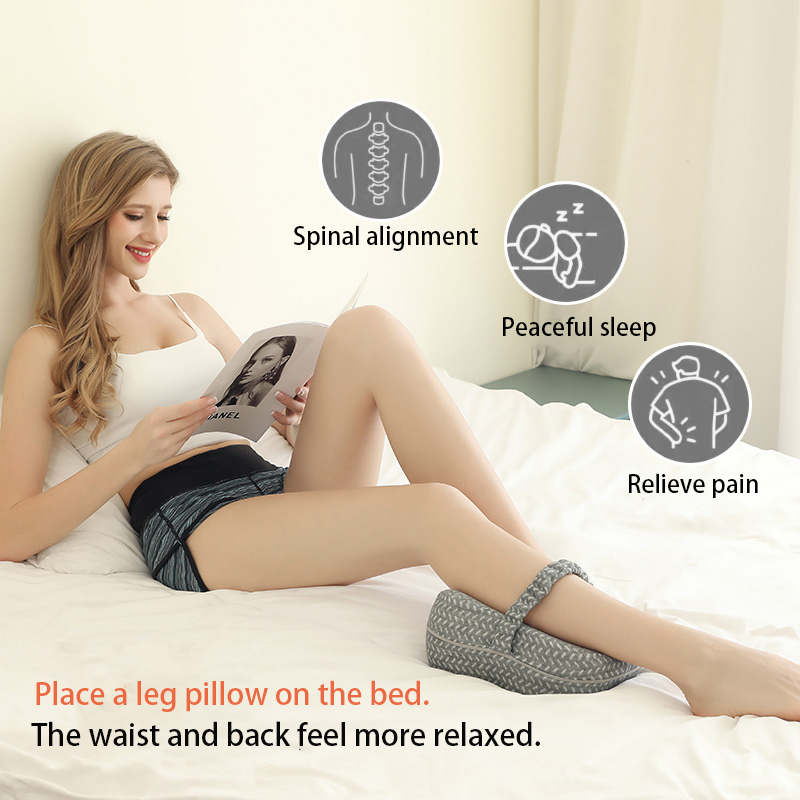
A corrective leg memory foam pillow is an accessory designed based on ergonomic principles. Its function is to support the legs and knees, ensuring that the lower body is aligned with the spine. This can relieve the pressure on joints, muscles, and the lumbar region. It is highly suitable for anyone experiencing knee pain or those with post-operative recovery needs. The memory foam density is the core indicator that determines the material’s support strength, softness, and durability. Through actual sleep tests and expert certification, the range of 80-120 kilograms per cubic meter is the optimal choice. Because low-density models will collapse under the weight of the human body, resulting in the inability to provide true alignment support. And overly dense models will feel stiff and create new pressure points.
Memory foam’s unique viscoelastic properties make it far more suited for leg and knee support than other materials, with benefits that directly translate to tangible orthopedic relief. Its slow-rebound feature lets it mold to the contours of your legs and knees as it absorbs body heat, wrapping every curve instead of creating hard edges or gaps. A contour memory foam leg pillow made with this material can distribute body pressure evenly across the contact area, with clinical data showing a pressure dispersion rate of over 90% — a key factor in preventing localized soreness. Unlike rigid materials, it can’t push back against your joints, making it ideal for those with arthritis or post-operative swelling. It also maintains its shape and support for years, avoiding the rapid sagging that renders other pillows useless. This combination of adaptive fit, pressure relief and long-lasting resilience means it can’t just feel comfortable; it actively supports your body’s natural alignment, turning passive sleep into active recovery. You won’t find this level of targeted care in materials that prioritize softness over therapeutic function.
| Performance Metric | Memory Foam | Fiber Fill |
| Orthopedic Support | Strong, maintains spinal | Weak, collapses easily, misaligns limbs |
| Contour Adaptability | High, molds to leg/knee curves | Low, stays fluffy but doesn’t conform |
| Durability | 2-3 years of consistent | 1-2 months of effective use before sagging |
| Pressure Relief | Excellent, disperses 90%+ of local pressure | Poor, concentrates pressure on small areas |
| Long-term Orthopedic Value | High, supports daily recovery | Low, only for temporary comfort |
This comparison result indicates that the fiber fillers have a significant effect in providing a comfortable and relaxing feeling. However, they cannot meet the continuous support requirements of orthopedic care. In contrast, the memory foam leg support pillow performs well in all aspects used for therapeutic purposes.
Density is the key factor determining the orthopedic effect of the memory foam leg pillow. Each density range can provide a completely different usage experience, but only one can achieve the optimal state required for treatment. Foam with a density lower than 80 kilograms per cubic meter is too soft and cannot keep the limbs in positions beneficial to the spine. This may aggravate the fatigue in the lower back.
When the foam density exceeds 120 kilograms per cubic meter, it becomes hard and cannot fit your unique body shape. It may even create new pressure points at the knees and calves. Many users have reported that after long-term use of these overly hard products, they experience increased muscle soreness. However, the density range of 80 – 120 kilograms per cubic meter achieves a perfect balance. It is both hard enough and soft enough to adapt to your body contour. Clinical tests have shown that this density of a leg elevation memory foam pillow can reduce the pressure on the knee joints by 45%, helping to promote blood circulation and relieve muscle tension.

Choosing a high-quality memory foam knee leg pillow is not a difficult task.
First, you need to check the density label. Opt for products that clearly indicate a density of 80 – 120 kilograms per cubic meter.
Then, test its slow rebound effect. You can press down and then release. A good pillow should rebound within 3 – 5 seconds. Products with rapid rebound do not have the necessary pressure dispersion characteristics.
You can first smell the pillow quickly. A mild and short-lasting odor is normal, but a strong and persistent smell indicates that it may use low-quality foam, or even contain irritating chemicals.
Check if the outer layer is made of breathable and harmless materials, such as bamboo fiber or organic cotton. These materials can prevent overheating and maintain hygiene for a long time.
The memory foam knee leg support pillow has an arc-shaped design. It precisely fits the position between the knees, which can reduce friction and pressure, thereby alleviating joint pain for side sleepers and those with arthritis.
The memory foam shaping leg pillow features an ergonomic curved design. It can fit the entire lower leg area, preventing leg movement during sleep, thus maintaining the stable alignment of the legs.
The elevation memory foam leg pillow features a gradient inclined surface design, which can elevate the legs to a position higher than the heart. This design is particularly effective in alleviating the swelling of the ankles and calves after prolonged activity.
The Memory Foam Leg Support Pillow can extend from the thigh to the ankle. This provides users with comprehensive support and can relieve muscle tension caused by long-term leg fatigue.
Leg pillows filled with fibers attract consumers due to their low price and initial fluffy texture. However, they still have certain limitations. As the fibers become loose, they will compress against each other and clump together, causing them to lose their supporting shape after being used for 1 to 2 months. This results in the originally full pillow turning into a more loose mat, unable to achieve the original effect. To restore the original shape, you need to frequently flip and tidy them. But this operation will disrupt sleep and won’t achieve the desired result. Over time, your sleep problems may worsen. For those seeking genuine orthopedic treatment, these fiber-filled materials cannot meet the body’s need for continuous and targeted support.
How long after using the memory foam leg pillow can one noticeably feel the relief effect?
Most users will notice a reduction in knee pain and improved sleep quality after using this pillow for 2 to 3 weeks per night. Continuing to use it every night and using it for 1 to 2 hours during rest during the day will lead to the effect faster.
Q2: How often should the orthopedic memory foam leg pillow be replaced?
A2: High-quality products can maintain orthopedic efficacy for 2 to 3 years. If the pillow no longer returns to its original shape after being pressed, it is time to replace it.
Q3: Is it safe to use the memory foam leg pillow during the recovery period after joint surgery?
A3: It is highly recommended. The affected limb after surgery needs gentle and stable support to promote recovery. Products with appropriate density grades can significantly reduce the pressure on the surgical site. DC Pillow offers a corrective product series tailored for post-operative needs. Its density is 95 kilograms per cubic meter. It can provide stable support while maintaining the adaptability of softness, achieving very good corrective effects.
Q4: Will using the memory foam leg pad overnight cause overheating?
A4: If it is a high-quality product, it won’t. Good products will use breathable foam formulations or be paired with such materials’ covers to prevent heat accumulation. In addition, 1 to 2 hours of rapid ventilation per week can also keep the pillow fresh and cool.
A corrective leg pillow is much more than just a comfortable accessory. It is also an important tool for adjusting body posture and reducing joint pressure. The quality of the materials and density are the key factors determining its quality. Memory foam outperforms filling fibers in every corrective aspect and can support the legs without causing unnecessary pressure. The leg pillow memory foam products have become the top choice for those who prioritize the health of their legs and spine.
If you are hesitating about which brand to choose, DC Pillow is a great option. It is made strictly following the golden standard density of 80 – 120 kilograms per cubic meter. Its products combine ergonomic designs covering all four core pillow types, ensuring that each product can provide real therapeutic value rather than just superficial comfort. The brand’s emphasis on safe, breathable materials and post-operative compatibility makes it a reliable choice for daily use and professional rehabilitation.
If knee pain or back pain has been affecting your rest, then don’t choose ordinary pillows that fail to fulfill their promises. Contact DC Pillow now to explore their orthopedic product line, get personalized advice, and take the first step towards achieving a more restful sleep.

We provide professional OEM/ODM services to make your memory foam pillow a reality in a precise and meticulous way.
Privacy Policy | SiteMap
Copyright Wenzhou Dengchuang Home Textile Co., Ltd.