- Whatsapp: +85270404389
- Email: [email protected]

If you have ever woken up due to lower back pain, sciatica, or stiff knees, you know how it can disrupt your entire day. While there are many solutions for chronic or acute body pain, one simple and non-invasive option stands out: the memory foam leg pillow. It provides support and protection for your limbs while you rest, allowing your muscles and joints to recover. However, to fully harness its pain-relieving potential, the placement is crucial. A memory foam knee leg pillow is not just a cushion placed under your legs; its position can affect the support it offers to your spine, hips, and knees. We will guide you through the best way to position your leg pillow for maximum comfort, from core principles to techniques for different types of pain, and even how to use it in various rest scenarios.
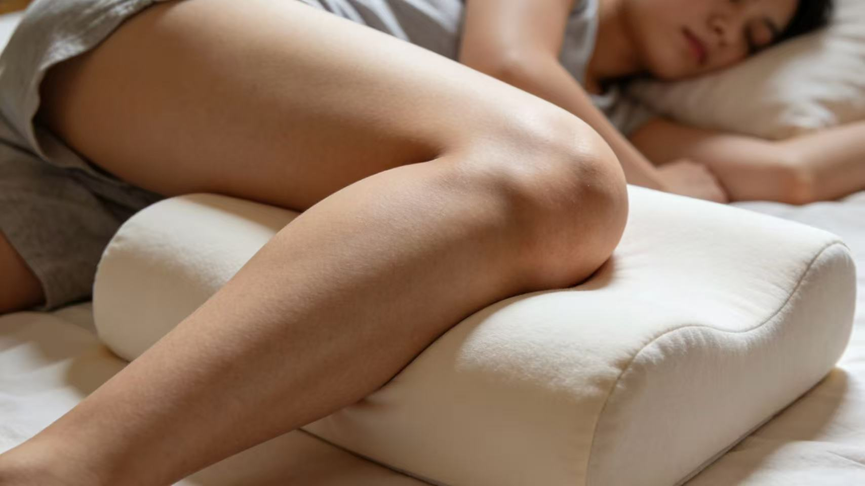
The Memory Foam Leg Support Pillow is a customized cushion made of high-density memory foam. This material can conform to the shape of the legs and knees, while providing stable and effective pressure relief. Unlike ordinary pillows, it can help you maintain the natural alignment of your spine and reduce friction between joints, no matter if you are sleeping, sitting, or recovering from an injury or exercise. There are various styles available on the market, including the leg pillows that fit the natural curves of the legs and knees, and elevated leg memory foam cushions that raise the legs above the heart level to promote blood circulation and relieve swelling. Each reliable manufacturer of memory foam leg pillows pays great attention to ergonomic design and high-quality foam to ensure that the cushions maintain their shape and provide stable support for a long time.
Before delving into the specific treatment methods for certain types of pain, it is crucial to master the correct positioning principles.
Sciatica is caused by compression of the sciatic nerve in the lower back or buttocks. It spreads along the legs and poor spinal alignment often aggravates this pain. In such cases, a memory foam knee leg pillow would be your best helper:
For those who sleep on their side, tucking the pillow tightly between the knees while keeping the hips level can reduce the pressure on the waist and relieve the compressed nerve.
For those who sleep on their backs, placing a thin leg memory foam pillow behind the knees and slightly bending the knees will relax the muscles in the waist and reduce the nerve compression.
Knee pain may be caused by arthritis, tendinitis or injury. By using a pillow, one can adjust the posture, reduce joint contact, and support the natural bending of the knee joint.
For those who sleep on their side, placing a pillow between their knees, ensuring it is centered over the kneecap, can prevent joint contact or friction. For pain after an injury, a contour memory foam leg pillow can be used to provide targeted support.
For those sleeping on their back, placing a pillow under the lower leg to keep the knee slightly bent can avoid direct pressure on the joint itself.
Lower back pain is almost always related to spinal misalignment, as the body naturally forces the lower back to bend unnaturally when lying flat. A memory foam leg support pillow can solve this problem as it can reduce the pressure on the lumbar spine.
For those sleeping on their backs, the best placement of the pillow is below the knees to create a slight bend. This can relax the muscles in the lower back and keep the spine aligned with the mattress.
For those sleeping on their sides, place the pillow between the knees and slightly move it towards the hips to prevent the lower back from twisting or bending.
Hip joint pain, whether caused by bursitis, labral tear or muscle strain, is exacerbated by uneven weight distribution. The key to posture adjustment lies in maintaining the hip joint in a natural position.
First, lie on the unaffected side. Then place a memory foam leg pillow on both knees and the upper part of the thighs. This can prevent the buttocks from sliding forward and distribute the body weight evenly on the pelvis.
For severe hip pain, a thin pad can be placed under the lower part of the injured side of the waist while using a leg pillow. This allows for comprehensive posture adjustment.
Swelling and poor blood circulation are caused by the accumulation of blood in the legs. Therefore, the key to the body position here is to raise the legs. Use a leg elevation memory foam pillow.
Lie on your back, place pillows under your calves and ankles. Please do not place them under your knees as that will impede blood flow.
Ensure that your legs are elevated 6 to 12 inches above the level of your heart while placing the pillows on a stable surface to keep them steady.
To relieve discomfort during the day, you can use the same elevation method. For example, when sitting in a recliner, let the pillows support your lower legs.

Your memory foam leg pillow is not only suitable for sleep at night, but also provides effective rest and recovery functions during the day. The key lies in adjusting its position according to specific circumstances, while following the aforementioned core alignment principle.
More support is needed during recovery after exercise and surgery. This is because your body is in the process of healing at this time, and it is prone to swelling and muscle soreness.
Even if you use the highest-quality leg memory foam pillows, improper placement can nullify their pain-relieving effects and even cause more discomfort. To avoid these common mistakes, please pay attention to the following points:
Q1: How can I determine which type of memory foam leg pillow is suitable for my pain condition?
A1: For joint pain or sciatica, using a leg pillow with curved memory foam or a memory foam knee leg pillow is the most appropriate, as they can adjust to the alignment of the joints. For swelling or poor blood circulation, a leg elevation memory foam pillow is the best choice.
Q2: Can I use a memory foam leg pillow if I sleep with my partner?
A2: Of course. Most memory foam leg support pillows are relatively small and won’t take up extra space on the bed. DC Pillow’s leg pillows are designed with a slim profile, making them perfect for shared sleeping spaces without sacrificing support.
Q3: How long will I feel pain relief after using the memory foam leg pillow?
A3: Many people will immediately feel a significant relief effect when they use this pillow correctly for the first time. For patients with chronic pain, continuous use will bring more lasting effects, allowing your body to adapt to the correct posture.
Q4: Can I clean my memory foam leg pillow?
A4: The memory foam itself should not be soaked in water. However, all leg memory foam pillow styles come with detachable and machine-washable pillowcases. For the foam core part, you can do a local cleaning with a damp cloth and mild soap, then let it dry completely before using again.
Don’t let back, knee, hip or leg pain become a part of your daily life. The memory foam leg pillow is one of the simplest and most effective ways to relieve pain. Adjust the usage method according to your own pain situation and make adjustments for different rest scenarios. You can fully utilize the potential of this ergonomic auxiliary product. Thus, you can achieve better body alignment, reduce pressure points, improve blood circulation, and obtain a truly refreshing rest state. The key lies in choosing high-quality pillows from reliable manufacturers of memory foam leg pillows. DC Pillow stands out in this field. They offer various styles to meet every pain point and rest preferences. Their foam material combines comfort and durability. Whether you are dealing with mild nighttime stiffness or chronic sciatica, their leg pillows can adapt to your body and lifestyle, turning restless nights into pain-free times.
If you are unsure which memory foam leg pillow is the most suitable for your specific condition or need guidance on how to adjust the best sitting posture for maximum relief, please consult the experts at DC Pillow immediately. Their ergonomic expert team can help you choose the appropriate pillow style, foam density, and sitting posture to effectively relieve your specific discomfort.

We provide professional OEM/ODM services to make your memory foam pillow a reality in a precise and meticulous way.
Privacy Policy | SiteMap
Copyright Wenzhou Dengchuang Home Textile Co., Ltd.