- Whatsapp: +85270404389
- Email: [email protected]


A lot of folks spend ages researching and comparing mattresses when they’re shopping for one, but they totally overlook the height of the pillow. They don’t realize that the pillow’s height directly impacts how comfy you are at night. Even if you shell out for a super – expensive, supportive mattress, if the pillow height is off, you’ll wake up with a stiff and sore neck the next day.
If you usually use a memory foam core pillow to support your spine and ease pain, this discomfort will be even more obvious. Down and synthetic – fiber pillows tend to sag and lose shape over time, while memory foam sleeping pillows can keep their shape and conform to the curves of your head and neck. So, the loft of the pillow directly affects whether your spine stays properly aligned and doesn’t get twisted while you sleep.
A bunch of people wanna buy a bed memory foam pillow that fits their body type, but they have no clue how to choose the right loft based on their sleeping position. People who sleep on their sides often find the pillow too thin, with their shoulders getting squished all night and waking up with a sore and swollen neck. Those who sleep on their backs might think the foam in the pillow is too thick, leaving the upper part of their back constantly tense. And folks who are sensitive to heat using solid memory – foam pillows will feel stuffy all night in a humid room.
This guide’ll clearly tell you how to pick the right loft for different sleeping positions and teach you how to choose a durable, high quality memory foam pillow. Plus, it’ll give you some useful tips on how to take good care of your memory – foam pillow in a humid environment so you can fully enjoy the comfort it brings.
Simply put, “loft” is the fixed height of the pillow when it’s lying flat without any pressure on it. This parameter is especially important for memory – foam pillows ’cause memory foam is a material that takes a while to bounce back.
Regular synthetic – fiber pillows get flat after a few hours of use, and their height drops significantly. But memory foam sleeping pillows can keep their thickness all night long. So, you gotta think carefully about this height value when choosing a pillow; don’t ignore it.
To figure out if a memory – foam pillow is sturdy and how long it’ll last, the key is the foam density. Knowing the density standard can help you easily pick a memory – foam sleep pillow with the right density and good durability.
The unit of foam density is pounds per cubic foot (PCF). Pillows of different densities vary a lot in terms of maintaining their loft:Less than 2.5 PCF: Low – density soft foam. Your head will sink right in, and the loft will be gone in half a year to a year.2.5–3.5 PCF: Medium – density balanced type. The loft can last 2 to 3 years. It’s a common choice for most families’ daily use.Over 3.5 PCF: High – density hard foam. The support can last 4 years. It’s great for people with chronic neck pain.
Low – density foam will sag after a while, forcing your neck to tilt and making your posture really uncomfortable. High – density foam keeps its height stable, but thinner folks might find it too hard. Medium – density foam is just right, suitable for most ordinary people.
Manufacturers usually divide memory foam core pillows into three levels of loft, which correspond to different body types and sleeping habits.
| Loft Tier | Height Range | Core Foam Trait | Target User Profile |
| Low Loft | 1–2 inches | Thin, flexible solid/shredded foam | Stomach sleepers, petite adults, kids |
| Medium Loft | 3–4 inches | Moderate thickness contoured foam | Back sleepers, combination sleepers, average body frames |
| High Loft | 4–6 inches | Thick shoulder-cutout foam | Broad-shouldered side sleepers, users with shoulder tension |
This simple three – tier classification method is super useful. Whether you’re shopping for a pillow in a physical store or buying directly from a professional memory foam sleep pillow manufacturer, you don’t have to figure it out on your own. Whether you’re making a bulk purchase or customizing pillows, communication becomes a lot easier.
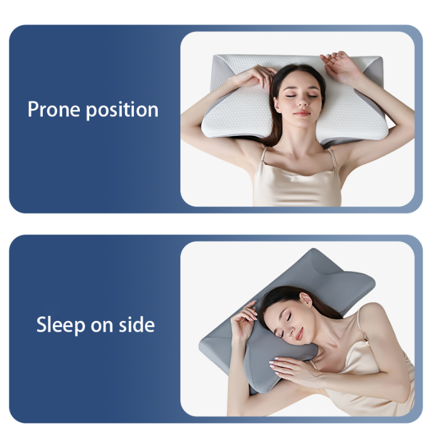
The way you usually sleep directly determines the height of the memory foam pillow for sleeping you need. Memory foam can conform to your body and relieve discomfort because the pillow’s height is just right, filling the gaps between your head, shoulders, and the mattress. It won’t let your neck sink too much or put too much pressure on your cervical spine.
When you sleep on your side, there’s a big gap between your ear and the mattress. So, it’s recommended to choose a memory foam pillow that’s 4 to 6 inches high. Otherwise, your neck will keep tilting down. If you tend to sweat and feel hot, the cool memory foam pillows for heat – sensitive people usually use fluffy and soft memory foam, combined with carbon fiber or a breathable gel layer.
The overall high – density solid foam material is not breathable, and heat tends to build up inside. The soft memory foam pillow has tiny ventilation holes inside, which can dissipate heat quickly and provide enough support for side sleepers. If you often wake up with a sore shoulder, it’s advisable to choose a high pillow with a shoulder groove first. That way, your shoulder can sink naturally without affecting the support structure of the pillow core.
Let’s talk about back sleepers first: A medium – height pillow of 3 to 4 inches can just support the natural curve of the neck. If the pillow is thicker than 4 inches, your chin will tuck in towards your chest, making the upper back muscles tense all night. If the pillow is too thin, there will be a gap under your neck, and you’ll lose the original support height. An ordinary bed memory foam pillow is suitable for back sleepers. You don’t need to add an extra cooling layer unless you’re sensitive to heat. Now, let’s talk about stomach sleepers: This sleeping position is the most harmful to the neck because your whole body will sink down, and your cervical spine will twist to one side. Only a 1 – to 2 – inch ultra – thin and low – density foam pillow is suitable for stomach sleepers. This light and soft memory foam pillow feels soft and can gently fit your cheek, keeping your head at the same level as the mattress, thus reducing the pressure on the cervical spine caused by twisting. Never use a high – density solid foam pillow when sleeping on your stomach because it’s too hard and will push your head up, making your neck stiff and causing pain the next day.

If you’re not clear about the criteria for judging when buying a memory foam pillow, you’re likely to buy a cheap and low – quality product that will collapse and lose its support within a few months. The following two core suggestions will teach you how to choose a high – quality memory foam pillow to effectively relieve neck discomfort.
As mentioned before, the foam density directly determines the pillow’s service life and its ability to maintain its fluffy height in the long run. Don’t choose a foam pillow without a density value. Most of these products are made of low – density, low – quality foam, which is prone to collapse after a period of use and can’t improve neck pain.
People who have neck discomfort all year round should choose a pillow with a density of 3PCF or higher first. The foam of this density can maintain its original curved contour all night without leaving indelible dents.
You can take a sample from a memory foam pillow manufacturer and do a simple rebound test: Press hard inside the pillow for 10 seconds and then release it. High – quality foam can fully recover within 3 seconds, while low – density and inferior foam will leave permanent dents, causing the pillow to completely lose its original support height.
The standard 20×26 – inch large memory foam pillow is suitable for most bed types. But if you have an extra – large double bed, a narrow single bed, or have special support needs for your body, the standard size may not be suitable, and you’ll need to customize it. Choose a reliable and trustworthy memory foam pillow manufacturer, and they can provide personalized services.
If your bedroom is damp all year round, like if you live by the seaside or rarely use an air conditioner to dehumidify, then the pillow is prone to mold growth, and the memory foam material will age faster, significantly shortening its lifespan. Here are some practical maintenance tips for memory foam core pillows in a damp environment to prevent the pillow from collapsing and extend its lifespan by several years: 1. Use a special waterproof and breathable pillowcase. The fabric has a built – in anti – mold function to prevent moisture from seeping into the memory foam core. 2. Take the pillow to the window for about an hour of ventilation every three to five days. Avoid direct sunlight as strong light may damage the foam material. 3. You can’t put the whole memory foam core in the washing machine. Just remove the outer pillowcase and wash it separately. 4. If the indoor humidity often exceeds 60%, you can place a small dehumidifier beside the bed to reduce the moisture in the surrounding environment. 5. For pillows filled with foam chips, flip and fluff them once a week to disperse the internal filling, prevent clumping due to dampness, and keep the height and firmness even.
As long as you keep following these maintenance steps, the pillow core will stay intact for a long time, maintain its original support height, and you won’t have to replace it too soon.
Can I adjust the height and fluffiness of a solid memory foam pillow at home?
You can’t adjust the height of a solid pillow core, but for pillows filled with foam chips, you can reduce the height by removing some filling. If you want to freely adjust the thickness in the long run, you can consider brands like DC Pillow that offer customizable memory foam pillows filled with chips.
Are highly fluffy memory foam pillows suitable for people who often change sleeping positions?
Most people who often change sleeping positions are more suited to medium – height memory foam pillows filled with chips. The pillow can gently conform to the body’s curves when switching from supine, side – lying, or prone positions.
How often should I replace a memory foam pillow?
Medium – density memory foam pillows usually last 2 to 3 years; high – density memory foam pillows can maintain support for up to 4 years. If the pillow doesn’t bounce back after being pressed or has permanently collapsed areas, it’s time to consider replacing it.
The key to sleeping comfortably on a memory foam pillow and waking up with no neck pain lies in choosing the right height that matches your sleeping position. People who like to sleep on their sides and are afraid of heat should choose a highly elastic, breathable memory foam sleeping pillow filled with chips for both coolness and support; back – sleepers should choose a medium – height curved pillow to support the neck curve firmly; stomach – sleepers should choose an ultra – thin and low pillow to avoid neck twisting.
Besides choosing the right height, you also need to pay attention to the foam density and pick a high – quality, durable memory foam pillow. If you have a special – shaped bed at home, you can have the size customized by a reliable manufacturer to make your sleep experience more personalized. At the same time, proper moisture – proof maintenance can help delay foam aging. Even if you live in a damp area, the pillow can still maintain good support.
DC Pillow offers a full range of standard and customizable memory foam pillows with different elasticities and heights to meet diverse sleeping habits. All are made of breathable, high – density foam, which can effectively relieve long – term neck pain. If you’re not sure which height or density to choose, or if you need a special size customized, feel free to consult our professional customer service. We’ll give you personalized purchase advice and factory – direct quotes.

We provide professional OEM/ODM services to make your memory foam pillow a reality in a precise and meticulous way.
Privacy Policy | SiteMap
Copyright Wenzhou Dengchuang Home Textile Co., Ltd.