- Whatsapp: +85270404389
- Email: [email protected]


Anyone suffering from restless legs syndrome knows how this persistent discomfort can severely disrupt daily life. Particularly at night, uncontrollable urges to move, shake, or walk the legs often arise, leading to exhaustion the following day. Many patients rely on prescription medications that frequently come with unpleasant side effects, prompting them to seek gentle, non-drug home remedies. This brings us to a central question: Can memory foam leg pillows help alleviate symptoms of restless legs syndrome?
This article provides a comprehensive overview of everything you need to know about RLS, including various types of foam leg cushions, their mechanisms of relief, buying guides, and proper usage techniques. As a non-invasive health support tool, well-designed memory foam knee leg pillows have gained popularity among individuals with mild to moderate RLS, offering consistent physical support without the need for medication.
RLS manifests through distinct sensory and behavioral signals, all triggered by prolonged periods of inactivity:
Uncomfortable sensations such as crawling, pulsing, aching, or tingling in the lower limbs when sitting or lying down
Temporary relief achieved immediately after stretching, walking, or jerking the legs
Recurrent leg twitches and involuntary kicking during sleep
Symptoms typically worsen at night, though they may occasionally occur during long flights or extended periods of desk work
Restless legs syndrome subtly yet profoundly interferes with everyday life. Nighttime restlessness leads to insomnia, leaving patients feeling groggy, irritable, and low on energy during work hours. Over time, sleep disturbances can exacerbate muscle tension and nerve sensitivity, creating a vicious cycle of discomfort. Lifestyle adjustments—such as reducing caffeine intake, applying heat or massage to the legs, and maintaining regular exercise—can offer partial relief, but ergonomic supportive tools provide a sustainable, everyday solution.
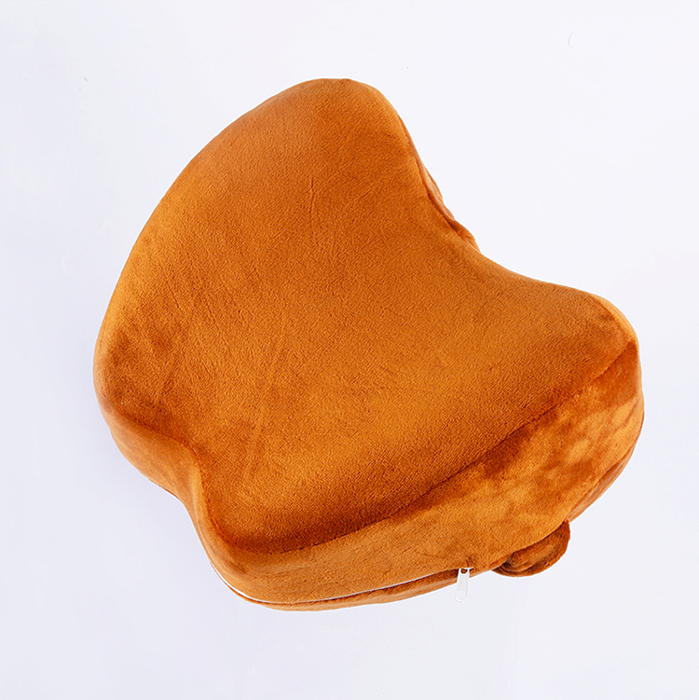
Contoured memory foam leg pillows feature an ergonomically designed curved shape. Unlike conventional cotton or polyester pillows that quickly flatten, their temperature-sensitive foam core conforms to the unique curves of the leg, evenly distributing pressure across the knees, calves, and thighs while avoiding rigid pressure points.
Customized grooves that fit around the knee joint and separate overlapping leg tissues
Hypoallergenic, dust-mite-resistant foam core suitable for sensitive skin
Removable, washable soft fabric cover for easy long-term hygiene maintenance
Stable density that maintains supportive shape throughout the night, eliminating frequent repositioning
A versatile memory foam leg support pillow offers multiple applications for individuals with restless legs syndrome:
Side sleeping: Place a wedge-shaped cushion between the legs to align the hips, reduce spinal twisting, and relieve tension on the calf nerves
Back sleeping: Bend the knees slightly to elevate the lower limbs, helping reduce venous blood pooling
Sitting at work: Rest the calves on the cushion to ease RLS symptoms caused by prolonged sitting
Post-exercise recovery: Elevate the legs while relaxing to promote improved blood circulation
The core benefit of elevating the memory foam pillow for the legs to a position higher than the heart for RLS patients lies in improving blood circulation and relieving muscle tension.
Promote venous return: By gently elevating the legs above the level of the heart, the use of gravity can expel the accumulated blood and fluids in the lower limbs, alleviating the feeling of heaviness and tingling.
Release compressed peripheral nerves: A neutral spine and knee alignment can eliminate continuous tissue pressure, thereby avoiding sending abnormal “movement signals” to the brain.
Reduce nocturnal involuntary twitching: Relaxed leg muscles can lower the frequency of periodic limb movements during sleep.
Eliminate uneven pressure points: The conforming foam can avoid sharp compression in the folds of the calves, ankles, and knees, thereby reducing the discomfort of leg cramps.
The discomfort of RLS is partly due to poor blood circulation during static rest and continuous mild nerve compression. When you place a leg elevation memory foam pillow to elevate them, the following three physiological changes occur:
Lymphatic drainage accelerates, expelling metabolic waste from the body, thereby reducing the crawling sensation.
The relaxed posterior leg muscles and calf muscles help relieve the overly sensitive nerve endings.
The alignment of the spine is stabilized, thereby eliminating the radiating pain signals from the lower back to the legs.
| Selection Factor | Ideal Standard for RLS Users |
| Foam Density | Medium-firm memory foam; overly soft foam collapses, overly hard foam creates new pressure pain |
| Shape | Contoured or wedge elevation design; flat rectangular cushions lack targeted support |
| Cover Material | Breathable cooling fabric; heat buildup worsens leg tingling overnight |
| Anti-slip Feature | Non-slip base or adjustable strap prevents sliding during sleep |
| Size Match | Match height to your body frame; tall users need wider, longer cushions for full calf coverage |

There are three mainstream styles of leg memory foam pillows, each designed for different sleep and rest habits and targeting different RLS triggers:
Profile-shaped knee separation pillow: A high-elastic memory foam knee leg pillow specifically designed for side sleepers. The pillow is fixed between the thighs with straps, maintaining stability throughout the night and preventing hip twisting and leg friction. It is particularly suitable for people whose symptoms worsen when their legs are close together during sleep.
Semi-circular support pillow: A flexible and multi-functional pillow that can be placed under the knees for supine sleepers or between the legs for lateral sleepers. Its curved foam surface also provides support for the waist and neck, alleviating tension throughout the day.
Office desk foot support wedge pillow: A compact non-slip foam pad designed for prolonged sitting, which raises the lower legs and effectively prevents lower limb cramps caused by prolonged sitting, as well as reducing swelling caused by pressure on the feet.
When purchasing large-capacity or long-lasting high-quality pillows, understanding how to find reliable manufacturers of memory foam leg pillows can help avoid using low-density, easily deformed foam products.
Verify foam certification: Trusted manufacturers provide CertiPUR-US certified memory foam, which does not contain harmful chemical additives that irritate sensitive skin.
Request sample testing: Reputable manufacturers provide trial samples for testing contour support, foam elasticity, and fabric breathability.
Confirm manufacturing options: Reliable factories support adjustable height, fabric replacement, and private labeling to meet individual needs.
Review after-sales service policies: Formal quality guarantees for foam deformation and fabric damage, reflecting stable production standards.
Even the highest-quality memory foam leg pillows cannot relieve RLS discomfort if the posture is incorrect. Please follow the following simple step-by-step methods to achieve maximum relief:
When sleeping on your side at night: Fix the knee pillow above the thighs, tighten the adjustable straps to prevent movement, and relax the hips to the neutral position.
When sleeping on your back at night: Place the wedge-shaped pillow behind the knees, making the lower legs slightly higher than the heart level; avoid raising too high to prevent pressure on the hips.
In an office sitting position: Place the foot pad wedge completely under the two lower legs, keep the ankles relaxed, and do not forcibly bend upwards.
Before bedtime, combine with care: Use the foam pillow in combination with 10 minutes of leg heat massage to further promote blood circulation.
Can memory foam foot pillows completely cure sleep leg numbness?
No. These pillows are a non-drug symptomatic relief tool, not a medical treatment method. Severe RLS if related to iron deficiency, kidney disease, or nerve damage requires professional medical intervention. Foam foot pillows can only be used as an auxiliary measure for daily use.
Are there reliable brands that produce orthopedic foam leg pillows for relieving RLS?
DC Pillow offers a series of ergonomic foam leg support products, including thick knee pillows and elevation wedges designed to relieve leg numbness discomfort, etc.
How long does it take to feel relief after starting to use?
Most mild RLS patients report a reduction in crawling and stinging sensations after using for 3 to 5 nights; while chronic symptoms improve gradually after continuous day-night use for two weeks.
Restless legs syndrome does not have to interfere with your daily life and sleep quality. As a mild and easily accessible health solution, various types of foam leg cushions can effectively alleviate the circulation and nerve stress problems that cause discomfort in restless legs syndrome.
Choose the most suitable contour memory foam leg pillow to relieve leg pain, and follow the standardized body position method to achieve long-term daily relief effects and reduce reliance on drug side effects. If you plan to purchase durable and orthopedic standard leg cushions, please spend time looking for qualified memory foam leg pillow manufacturers with complete foam safety certifications. DC Pillow is designed with multi-scenario memory foam support products specifically for RLS patients, balancing ergonomic contours with long-term foam durability.
If you want to learn more about custom leg support pads, or understand the bulk purchase prices and personalized foam density suggestions for RLS, please contact the brand’s professional consultant team to obtain one-on-one exclusive guidance.

We provide professional OEM/ODM services to make your memory foam pillow a reality in a precise and meticulous way.
Privacy Policy | SiteMap
Copyright Wenzhou Dengchuang Home Textile Co., Ltd.